Lead generation9 min read
Roofing Referral Program: How to Set One Up in 7 Steps
How to set up a roofing referral program: who to ask, when to ask, what to give, how to track it, and the state rules on referral rewards for insurance work.

In this article
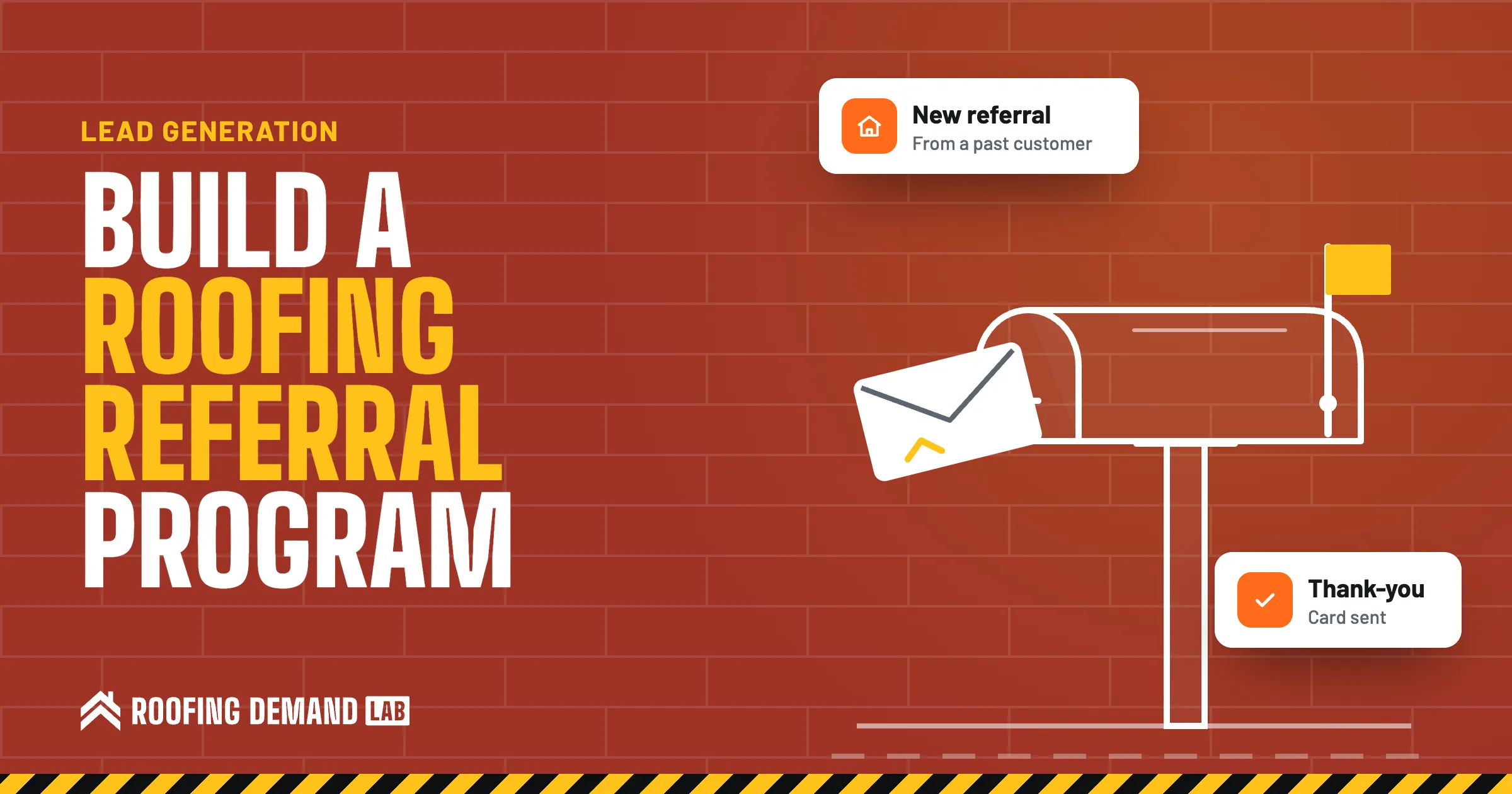
Most roofers get some referrals. Far fewer ask for them on purpose. A neighbor watches your crew tear off a roof next door, likes how clean the yard looks at the end, and asks the homeowner who did it. A roofing referral program makes that happen more often, and lets you tell when it does.
It doesn’t need software or a fancy name. It needs a few decisions written down: who you ask, when you ask, what (if anything) you give, and how you keep track. There’s one more decision most guides skip, and in roofing it comes first: what your state allows when the job is paid for by insurance.
The short answer
Check your state’s rules on referral rewards before anything else, because some states, Florida included, ban them on insurance-funded roofing work. Then ask every customer at the final walkthrough, give them an easy way to pass your name along, bring in partners like real estate agents and other trades, log every referral, and thank people quickly whether the job closes or not. Keep referral rewards completely separate from review requests.
What a roofing referral program is (and isn’t)
A referral program is a written plan for turning happy customers and local partners into introductions. Some roofers pay a reward. Others send a handwritten card. Both count, as long as the asking happens every time.
What it isn’t: a way to pay for reviews, a door-knocking script that offers homeowners something for a free inspection, or a deal to split insurance money with whoever sends the claim your way. Those can get you in trouble with Google, with the FTC, or with your state licensing board.
| Leaving referrals to chance | A referral program | |
|---|---|---|
| When you ask | When you remember | At every final walkthrough |
| What people hand over | Your name, if they recall it | A card or a link to your referral page |
| Rewards | Whatever feels right that day | Written terms, the same for everyone, checked against state rules |
| Tracking | Nobody knows where jobs came from | Every referral logged with its source |
How to set up a roofing referral program in 7 steps
1. Check your state’s rules before you pick a reward
In roofing, a simple thank-you gift can turn into a legal problem, because so much of the work runs through homeowners’ insurance.
Florida’s referral rule
Florida law bars contractors from offering, delivering, receiving, or accepting any compensation, inducement, or reward for the referral of services paid for by property insurance proceeds. It also bars offering a homeowner a gift, cash, gift card, deductible waiver, or anything else of value for allowing a roof inspection or for filing a roof insurance claim, and it allows fines of up to $10,000 per violation (Florida Statutes section 489.147 (opens in a new tab)). The same law treats people who solicit on a contractor’s behalf for pay as acting for the contractor.
Florida is one example, not the whole list. Before you print a single referral card, ask your state contractor licensing board (and an attorney who works with contractors) what you can offer, on which jobs, and to whom. If your state limits rewards on insurance work, you can still run a program. Thank people without a reward on insurance jobs, and keep any reward to retail jobs the homeowner pays for directly, if your attorney agrees that’s allowed.
2. Pick a reward you’d be happy to pay every time
There’s no standard roofing referral bonus, and you don’t need one. Pick something you can afford on your smallest typical job and would gladly hand over every single time. Common choices:
| Reward | Where it works | What to watch |
|---|---|---|
| Handwritten thank-you card or call | Every job, including insurance work | Nothing. Do this no matter what else you offer. |
| Gift card | Retail jobs, where your state allows it | Check state rules on insurance-funded work |
| Donation to a local charity in their name | Customers who’d turn down cash | Same state-rule check applies |
| Cash or check | Retail jobs, where your state allows it | Tax reporting, so ask your CPA |
Pay when the referred job is signed and paid, not when an inspection is booked. Paying for inspections looks a lot like the inspection inducements Florida bans, and it also rewards appointments that never turn into work.
On cash: the IRS lists prizes and awards among the payments reported on Form 1099-MISC (opens in a new tab) once they reach a set amount in a year. If you plan to pay cash rewards, ask your CPA how to track and report them before the first check goes out.
Write the terms down in a few lines: what counts as a referral, when the reward is paid, and that it doesn’t apply where the law doesn’t allow it. Same terms for everybody.
3. Ask at the moment people are happiest
The best time to ask is the final walkthrough. The new roof is on, the magnet sweep is done, and the homeowner is standing in a clean yard. Say it plainly: “If anyone on your street asks who did the roof, we’d love the introduction.” Hand them two cards.
Other good moments:
- With the final invoice. A short line at the bottom and a link to your referral page.
- A yearly check-in. A note around the anniversary of the job, asking how the roof’s holding up.
- When a neighbor asks your crew. Give crews cards too.
4. Make referring take ten seconds
Plenty of happy customers never get around to recommending you, because it takes effort. Cut the effort down:
- Referral cards. Your name, what you do, and a short web address. Two per customer, so one can go to a friend.
- A referral page on your website. A short form with fields for the friend’s name, address, and the referrer’s name, plus your written terms. A roofing website with a page like this gives every referral a place to land.
- A “How did you hear about us?” field on every form and in every phone intake, so referred leads don’t get logged as “Google.”
One caution on the referral form: when someone submits a friend’s details, that friend didn’t ask to hear from you yet. Reach out like a person (a phone call that mentions who sent you), not by adding them to automated texts or an email list.
5. Bring in partners, not just customers
Past customers aren’t your only source. Plenty of people meet homeowners who need a roofer before you do:
- Real estate agents and home inspectors, who see roofs at every sale
- Property managers with small portfolios
- Gutter, siding, window, HVAC, and solar contractors who don’t do roofs
- Painters and handymen who get asked “do you know a good roofer?”
The simplest partner deal is a two-way one: you send them work when a customer needs what they do, and they send you roofing work. Some partners won’t want a fee at all. If you do want to offer one, ask the partner first whether they’re allowed to accept it, and remember that in Florida the referral ban on insurance-funded work covers receiving rewards, not just paying them.
6. Log every referral
If you can’t say how many jobs came from referrals last quarter, you don’t have a program yet. A spreadsheet works. So does a field in whatever CRM you already use. For each referral, write down:
- Who referred, and who was referred
- The date it came in
- Retail or insurance job
- Where it stands: contacted, inspected, signed, paid, or lost
- Any reward owed, and the date it was sent
Look at it once a month to see which customers and partners send work.
7. Thank people fast, whether the job closes or not
A referral that doesn’t sign is still a favor. Call or send a card within a few days either way. If a reward applies, send it as soon as the conditions are met. A reward that shows up three months late does more harm than no reward.
Tell the referrer how it went in general terms (“We got the roof done last week, thanks again”), and keep the neighbor’s price and details private.
Keep referral rewards and reviews apart
It’s tempting to fold everything into one ask: “Leave us a review or send a friend, and get $25.” Don’t.
Two rules on rewards and reviews
Google says offering incentives, like free or discounted goods or services, in exchange for reviews is strictly prohibited (Google’s review tips for businesses (opens in a new tab)). And if you give customers something of value for posting about you on social media, the FTC says that connection should be disclosed, and that you can’t make an incentive depend on a review being positive (FTC Endorsement Guides FAQ (opens in a new tab)).
Ask every customer for a review with no strings attached, and run referrals separately. Our roofing reviews guide covers the review side in detail.
Texting and emailing about referrals
Consent for texts and email rules
FCC rules require consent before autodialed calls or texts to a cell phone, and commercial texts require written consent (FCC guide to robocalls and texts (opens in a new tab)). For email, the FTC’s CAN-SPAM guide lists the basics (accurate sender details, an honest subject line, your postal address, and a working opt-out honored within 10 business days), and says a business that offers something in exchange for forwarding a message may be responsible for complying (FTC CAN-SPAM compliance guide (opens in a new tab)). Get consent in your contract before texting customers, and have an attorney review any texting software.
The practical version: text your own customers only after they’ve agreed to it in writing, never text referred friends who haven’t asked to hear from you, and treat any “forward this to a friend” email as your own marketing email.
Where referrals fit in the rest of your marketing
Referrals tend to be easy leads to close, but you can’t turn them up when the schedule’s empty. They grow with the number of roofs you finish, so they work best next to things that bring in strangers: your Google Business Profile, a website with a page for each service and town, and ads when you need work fast. Our guide on how to get roofing leads compares ten sources side by side.
Roofing Demand Lab handles that side for roofing companies only. Plans start at $500 a month, every plan includes a roofing website, and there’s a 3-month minimum before it goes month to month (see plans). We can’t promise a set number of jobs. We can keep the website, SEO, and Google profile work moving while you focus on the roofs that create referrals in the first place.
Questions roofers ask about referral programs
How much is a referral bonus for roofing?
There’s no standard amount. Pick something you can afford on your smallest typical job and would pay every time, and pay it when the referred job is signed and paid. Check your state’s rules first, since Florida, for example, bans referral rewards on work paid for by property insurance (Florida Statutes section 489.147 (opens in a new tab)).
How do I promote a referral program?
Mention it at the final walkthrough, hand every customer two referral cards, and add a line about it to your final invoice. Give it its own page on your website with your written terms. Remind past customers once a year with a check-in, by mail or by email if they’ve agreed to hear from you.
Can roofers pay referral fees to real estate agents or other contractors?
Sometimes, depending on your state and on the partner’s own rules. Ask the partner whether they can accept a fee before you offer one, and check your state’s law on insurance-funded work, which in Florida bars both paying and accepting referral rewards. Some partners prefer a simple two-way referral swap with no money involved.