Business9 min read
Roofing Insurance: The Coverage a Roofing Company Needs
Roofing insurance for owners: general liability, workers' comp, commercial auto, tools, bonds, and what to ask an agent before you buy or renew a policy.

In this article
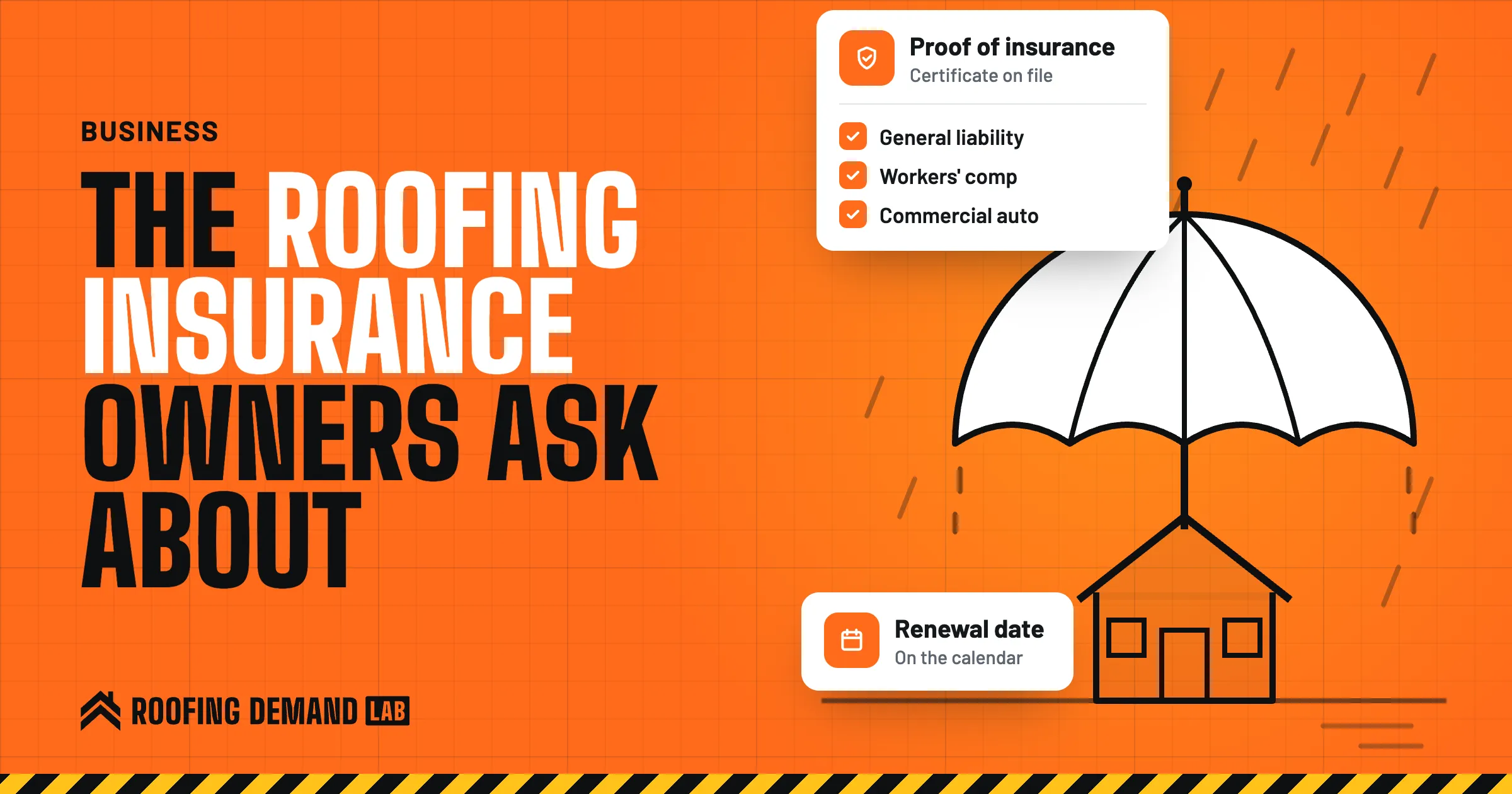
Roofing insurance is the set of business policies that pays when a job goes wrong: a crew member gets hurt, a tarp blows off and water ruins a ceiling, a truck backs into a homeowner’s car. Most roofing companies start with general liability. Once they hire, workers’ compensation comes next. After that it’s commercial auto, coverage for tools and equipment, and whatever your state board, your customers, or your ad platforms ask to see.
This guide walks through the policies roofing company owners ask about most, what each one is for, and the questions to bring to an agent. It doesn’t quote prices. Your premium depends on your state, your payroll, the kind of roofs you work on, and your claims history, so any number we printed would be wrong for most readers.
The short answer
Most roofing companies carry general liability insurance, workers’ compensation once they have employees, and commercial auto for their trucks. Many add coverage for tools and equipment, and some need a surety bond for licensing or bigger contracts. What your state requires, and how much coverage you need, varies, so check your state’s rules and get quotes from a licensed commercial insurance agent who writes policies for roofers.
General information only
This article explains common types of coverage. It isn’t insurance, legal, or tax advice. Rules differ by state, and policies differ by insurer, so confirm the details with your state agencies and a licensed agent before you buy.
The policies roofing company owners ask about
The SBA’s guide to business insurance is a good place to start because it explains the common policy types in plain words and says up front that “laws requiring insurance vary by state” (SBA on business insurance (opens in a new tab)). Here’s how those types usually apply to a roofing company.
1. General liability
This is the policy most people mean when they say a roofer is “insured.” The SBA describes general liability as coverage that protects against financial loss from bodily injury, property damage, and medical expenses. For a roofer, think of a shingle bundle sliding off the roof onto a parked car, or a homeowner tripping over a hose in the driveway.
Don’t stop at “do I have it?” Ask your agent:
- Does the policy exclude roofing work over a certain height or pitch?
- Is damage that shows up after the job is finished covered, and for how long?
- Are water damage and interior damage from an open roof covered?
- Does it cover work done by your subcontractors, or only your own crews?
The answers live in the policy wording, and they’re different from one insurer to the next. Get them in writing.
2. Workers’ compensation
Roofing is hard on people. OSHA calls falls the leading cause of death in construction, and its page cites BLS data showing 389 fatal falls to a lower level out of 1,034 construction deaths in 2024 (OSHA’s fall prevention campaign (opens in a new tab)). Workers’ comp is the policy that pays for an injured employee’s medical care and lost wages.
The SBA lists workers’ compensation among the coverage businesses with employees are required to carry. The details are set state by state: who counts as an employee, whether owners can opt out, and how premiums are figured. The U.S. Department of Labor keeps a directory that links to every state’s workers’ compensation office (state workers’ comp officials (opens in a new tab)). Start there and read your own state’s page.
3. Commercial auto
Your trucks and trailers spend more time on the road than on the job. If a work truck causes a wreck on the way to a tear-off, you want to know before it happens which policy pays.
Ask your agent three things: whether the trucks should be on a commercial auto policy, whether employees driving their own vehicles for work are covered, and whether a loaded trailer is covered when it’s hitched to a truck. If anything is titled in your personal name, say so.
4. Tools and equipment
General liability is about harm you do to other people and their property. Your own nail guns, ladders, and dump trailer are a separate question. Ask your agent which policy would pay if they’re stolen off a job site, and whether that coverage follows tools and equipment that leave the shop every morning.
5. Property, a business owner’s policy, and the rest
If you rent a shop or keep material in a yard, commercial property insurance covers loss or damage to company property from a range of events, per the SBA. The SBA also describes a business owner’s policy as a package that bundles typical coverage options into one and says that can save money. For a roofing company, ask whether a bundle like that fits your work or whether roofing is excluded from the insurer’s packaged programs.
Professional liability, which the SBA describes as coverage for errors and negligence, comes up for companies that sell inspections or design work. An umbrella policy, which adds coverage on top of your other limits, comes up when a commercial customer asks for higher limits than your base policy carries.
| Policy | What it’s for | A question to ask your agent |
|---|---|---|
| General liability | Injuries and property damage you cause others | What does it exclude for roofing work? |
| Workers’ comp | Medical care and lost wages for injured employees | How does my state treat owners and subcontractors? |
| Commercial auto | Your trucks and trailers | Who is covered when an employee drives? |
| Tools and equipment | Gear that leaves the shop | Does it cover theft from a job site? |
| Commercial property | Your shop, office, and stored material | Is material stored at a job site covered? |
A bond isn’t an insurance policy
Owners mix these up all the time. The SBA explains that surety bonds help small businesses win contracts by guaranteeing the customer that the work will be completed (SBA on surety bonds (opens in a new tab)). It lists bid bonds, payment bonds (which cover your suppliers and subcontractors), and performance bonds, and notes that many public and private contracts require them.
A bond protects your customer. Insurance protects your company. Ask your state and local licensing offices whether a license bond is part of getting licensed where you work. If you plan to bid on public or larger commercial jobs, talk to a surety agent before the bid is due, not the week of. Our guide to commercial roofing leads covers what those bids look like.
Subcontractors and workers’ comp
A lot of roofing companies use subcontracted crews. That raises a question you want settled before an auditor or an injured worker settles it for you: are those crews really independent contractors?
The IRS looks at the whole relationship, including how much control you have over what the worker does and how, who controls the business side of the job, and what kind of relationship the two of you have (IRS on contractors vs. employees (opens in a new tab)). That page covers federal tax rules. Your state may use its own test for workers’ comp and unemployment.
Check your state’s rules
How a worker is classified can affect your taxes, your workers’ comp premium, and who pays when someone gets hurt. Talk to a tax professional and a licensed agent about your own setup, and read your state workers’ comp office’s guidance.
A habit worth building: get a current certificate of insurance from every sub before they start, keep a copy, and note the expiration date on your calendar. Ask your agent how your policy treats a sub who turns out to be uninsured.
What your state, your customers, and Google may ask for
Insurance requirements show up in three places a roofing owner deals with every year.
Your state. Some states tie the contractor license to proof of insurance. Florida, for example, requires applicants for a contractor certificate or registration to attest that they carry workers’ compensation, public liability, and property damage insurance, in amounts set by board rule (Florida Statutes 489.115 (opens in a new tab)). Other states handle it differently, and some leave roofing licensing to cities or counties. Our guide on how to start a roofing company covers where to look.
Your customers. Property managers, general contractors, and HOAs often ask for a certificate of insurance before a bid is considered, and some ask to be named on it. Keep your agent’s contact handy so you can turn those requests around the same day.
Google. If you run Local Services Ads, Google’s screening and verification requirements list general liability insurance among the checks for the roofing category, along with background checks and state licenses where they apply (Google’s LSA screening requirements (opens in a new tab)). Keep the certificate current, and put the renewal date on the same calendar as your license. Our roofing PPC page covers how we set up Local Services Ads.
Say “licensed and insured” only when you can hand over the paperwork the same day.
The same goes for your website. Homeowners ask whether a roofer is licensed and insured, so put your license number and the coverage you carry where people can find it, and update the page when anything changes. It’s one of the trust details every roofing website we build puts up front.
How to shop for roofing insurance
Treat it like a bid: give every agent the same facts so the quotes line up. Before you call, gather:
- Your annual payroll, split by office staff and roofing crews
- How much you pay subcontractors, and whether they carry their own coverage
- The kind of work you do (residential or commercial, steep-slope or low-slope, repair or replacement)
- Your trucks, trailers, and equipment
- The states and counties you work in
- Your claims history for the last few years
Then talk to more than one licensed commercial agent, ideally ones who already write policies for roofers. The SBA warns that prices and benefits “can vary significantly” and says to compare rates, terms, and benefits. If you want to confirm an agent’s license or file a complaint, the NAIC keeps a directory of every state insurance department (NAIC state insurance departments (opens in a new tab)).
Review your coverage at least once a year, and again when something big changes: your first employee, a new truck, a move into commercial work, or a new state.
Questions roofers ask about insurance
What insurance should a roofing contractor have?
Most roofing contractors carry general liability, workers’ compensation once they have employees, and commercial auto for work vehicles. Many add coverage for tools and equipment, and some need a surety bond for licensing or contracts. What’s required depends on your state, so check with your state agencies and a licensed agent.
How much is roofing insurance?
There’s no honest single number. Premiums depend on your state, payroll, the type of roofing you do, your vehicles, your coverage limits, and your claims history. Get quotes from several licensed agents using the same facts, and compare the terms as well as the price.
Do I need workers’ comp if I only use subcontractors?
It depends on your state’s rules and on whether those crews are truly independent contractors. The IRS looks at control and the whole working relationship, and states may apply their own tests. Ask a licensed agent and a tax professional, and collect a current certificate of insurance from every sub.
Is a surety bond the same as insurance?
No. A surety bond guarantees your customer that the work will be finished and that suppliers and subs get paid. Insurance protects your own company from losses like injuries and property damage. Some licenses and contracts require a bond on top of your insurance.